 (208) 991-3502
 Meridian, ID



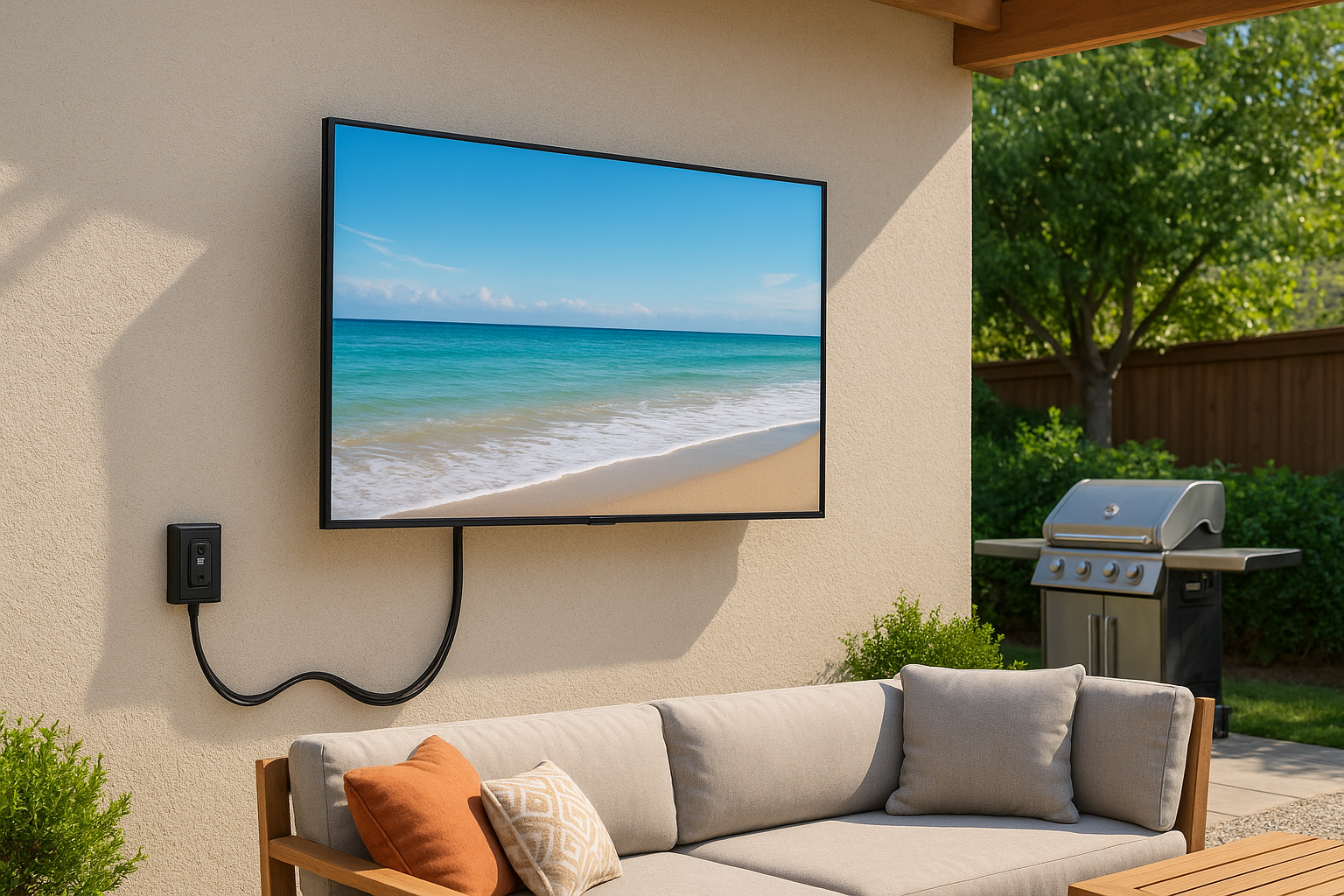

Plan outdoor TV installation around model-specific sun exposure, environmental limits, structural support, cable access and separate electrical evaluation.
You bought an outdoor TV, or you are about to, and now you have a blank patio wall and a drill. Outdoor TV installation looks simple until you factor in sun glare, rain, a 70-pound screen, and a power cord with nowhere to go. Get it wrong and you risk a cracked wall, a voided warranty, or a TV on the ground.
Outdoor TV installation requires a custom estimate for the actual TV, mount, structure, exposure, access, signal/network/audio and cable route. Standard indoor mounting rates are not an outdoor package price. New or changed outdoor power requires evaluation by an appropriately licensed electrical professional and is not included in TV installation.
Below, we walk through where to place the screen, the tools and mount you need, the DIY steps in order, and what a pro costs. At Treasure Valley Solutions, we have installed TVs across Meridian, Boise, and Eagle since 2014, so we also flag the jobs that are worth handing off.
What to know before you install an outdoor TV
Outdoor-rated TV or indoor TV outside
Outdoor suitability depends on the exact model’s shade, partial-sun or full-sun designation, environmental rating, operating and storage temperature limits, installation instructions and actual exposure. An outdoor label is not a universal weatherproof or all-season guarantee. A cover does not make an indoor TV suitable for outdoor use. Confirm current manufacturer warranty terms for the exact model and use.
Check the exact model’s installation requirements against the actual exposure; an outdoor label alone is not enough.
Review daylight glare and the time of use with the manufacturer’s shade, partial-sun or full-sun designation. Brightness alone does not establish exposure suitability.
Outdoor suitability depends on the exact model’s shade, partial-sun or full-sun designation, environmental rating, operating and storage temperature limits, installation instructions and actual exposure. An outdoor label is not a universal weatherproof or all-season guarantee. A cover does not make an indoor TV suitable for outdoor use. Confirm current manufacturer warranty terms for the exact model and use. Brightness alone cannot determine sun suitability; assess glare and viewing position at the times you watch.
Wall, power, and permission checks
Before you buy a mount, confirm three things. Each one changes the hardware, the cost, or whether you can proceed at all.
- Wall type: Wood studs, brick, concrete block, and stucco each need different anchors. Vinyl siding holds no weight, so you must mount to the framing behind it.
- Power: The outlet should be GFCI protected with a weatherproof in-use cover, as the National Electrical Code requires for outdoor receptacles. Never feed an indoor extension cord through a door or window gap.
- Permission: Check HOA rules or your lease. Adding a new outlet may also need a permit.
Skipping this homework is how a straightforward outdoor TV installation turns into a second trip to the hardware store. Knowing how to mount an outdoor TV safely starts with knowing what sits behind your wall and where the power will come from.
Step 1. Choose the right spot and TV type
Placement decides how good the picture looks and how long the TV lasts. Walk your patio at the time of day you watch most, and note where the sun hits each wall before you drill anything.
Pick a wall that protects the screen
Aim for a covered wall facing north or east, since it gets the least afternoon glare. West-facing walls bake the screen in the late afternoon. A roof overhang keeps rain and direct sun off the panel, which helps any outdoor TV installation last. Keep the set well away from grills, fire pits, and sprinklers, because heat and spray shorten its life.
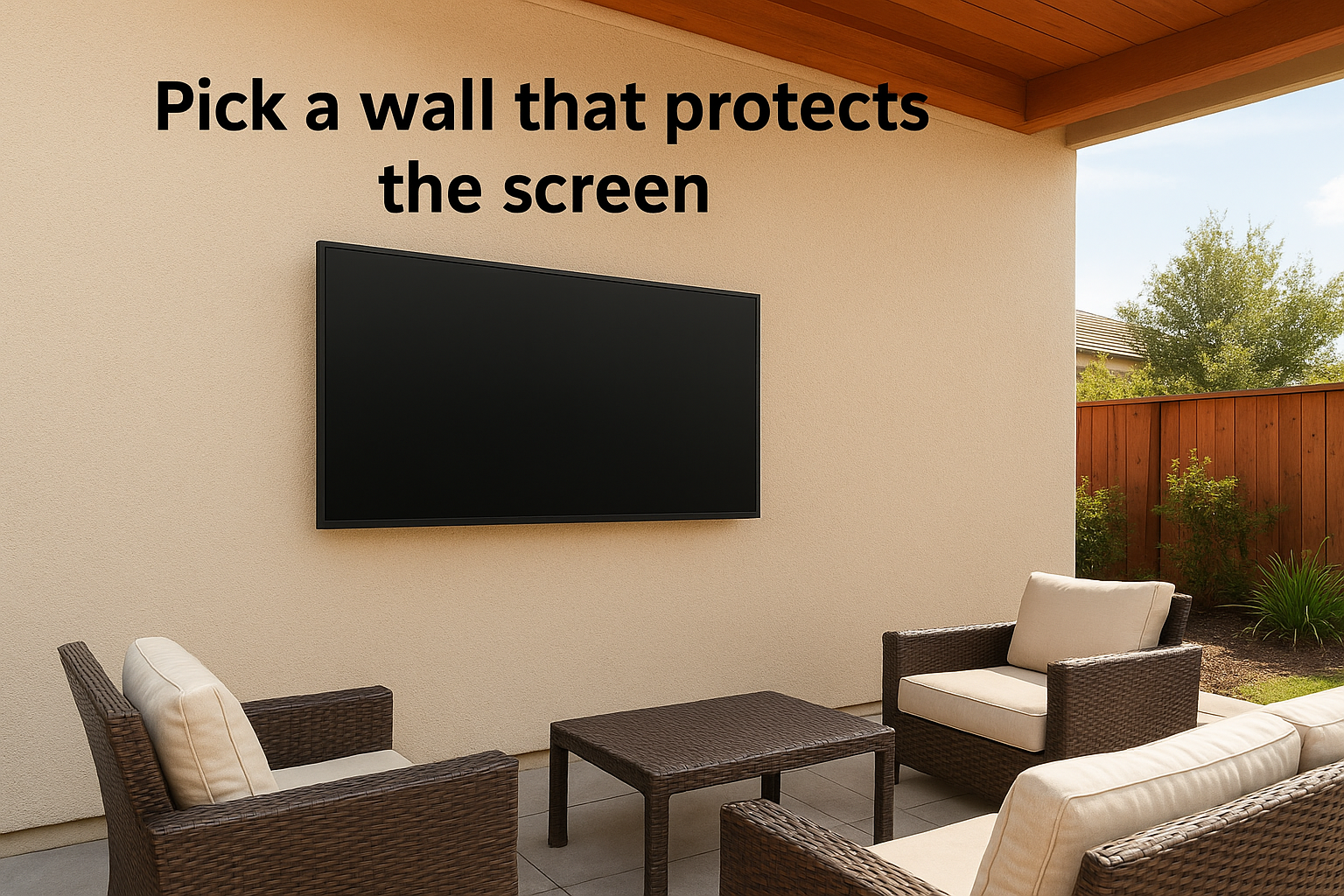
The best spot is the wall that sun and weather reach least.
Set the height and viewing distance
Mount the center of the screen at seated eye level, about 42 to 48 inches off the floor. If you mostly stand around a bar or grill, go a few inches higher. Then match screen size to how far back people sit, using 1.5 to 2.5 times the diagonal as a guide.
| Screen size | Viewing distance |
|---|---|
| 43 in | 5 to 9 ft |
| 55 in | 7 to 11 ft |
| 65 in | 8 to 13 ft |
Finally, decide whether you need motion. A fixed mount is cheapest, but a tilting or full-motion arm lets you angle the screen away from glare. If you want that flexibility, plan your outdoor TV mount installation around it now, because the arm affects which wall and stud spacing will work.
Step 2. Gather the mount, tools, and power plan
Buy everything before you drill, because a missing anchor halfway through leaves you with a TV leaning against the wall.
Choose exposure-appropriate mounting hardware
Use a mount explicitly suitable for the TV’s actual weight, VESA pattern, screw requirements, mounting structure and intended movement, following the exact TV and mount instructions. Screen diagonal, a generic weight multiplier or a particular anchor alone does not establish suitability. Outdoor hardware must also suit the exposure, corrosion and wind conditions.
Tools and fasteners checklist
Gather these before you climb the ladder, and line up a second person to help lift the screen. Match your anchors to your wall type, not to whatever came in the box.
- Stud finder and a 24-inch level
- Drill, plus masonry bits for brick or concrete
- Socket wrench set and tape measure
- Lag bolts for wood studs, or sleeve anchors for masonry
- Exterior-grade silicone to seal every drill hole
Plan power and cable routing
Power comes last on the list, but it limits everything else. You need a GFCI-protected, weatherproof outlet within reach of the TV's cord, with no extension cords in the path. For HDMI or streaming lines, use in-wall rated cable so you are not running loose wires across the siding.
Decide where the power and cables go before you decide where the screws go.
If the nearest outlet is too far away, bring in a licensed electrician. Adding a new exterior circuit is the one part of this job that is not worth guessing at.
Step 3. Mount the TV and secure the cables
Use a mount explicitly suitable for the TV’s actual weight, VESA pattern, screw requirements, mounting structure and intended movement, following the exact TV and mount instructions. Screen diagonal, a generic weight multiplier or a particular anchor alone does not establish suitability. Outdoor hardware must also suit the exposure, corrosion and wind conditions.
Hang the TV on the wall plate
Use a mount explicitly suitable for the TV’s actual weight, VESA pattern, screw requirements, mounting structure and intended movement, following the exact TV and mount instructions. Screen diagonal, a generic weight multiplier or a particular anchor alone does not establish suitability. Outdoor hardware must also suit the exposure, corrosion and wind conditions.
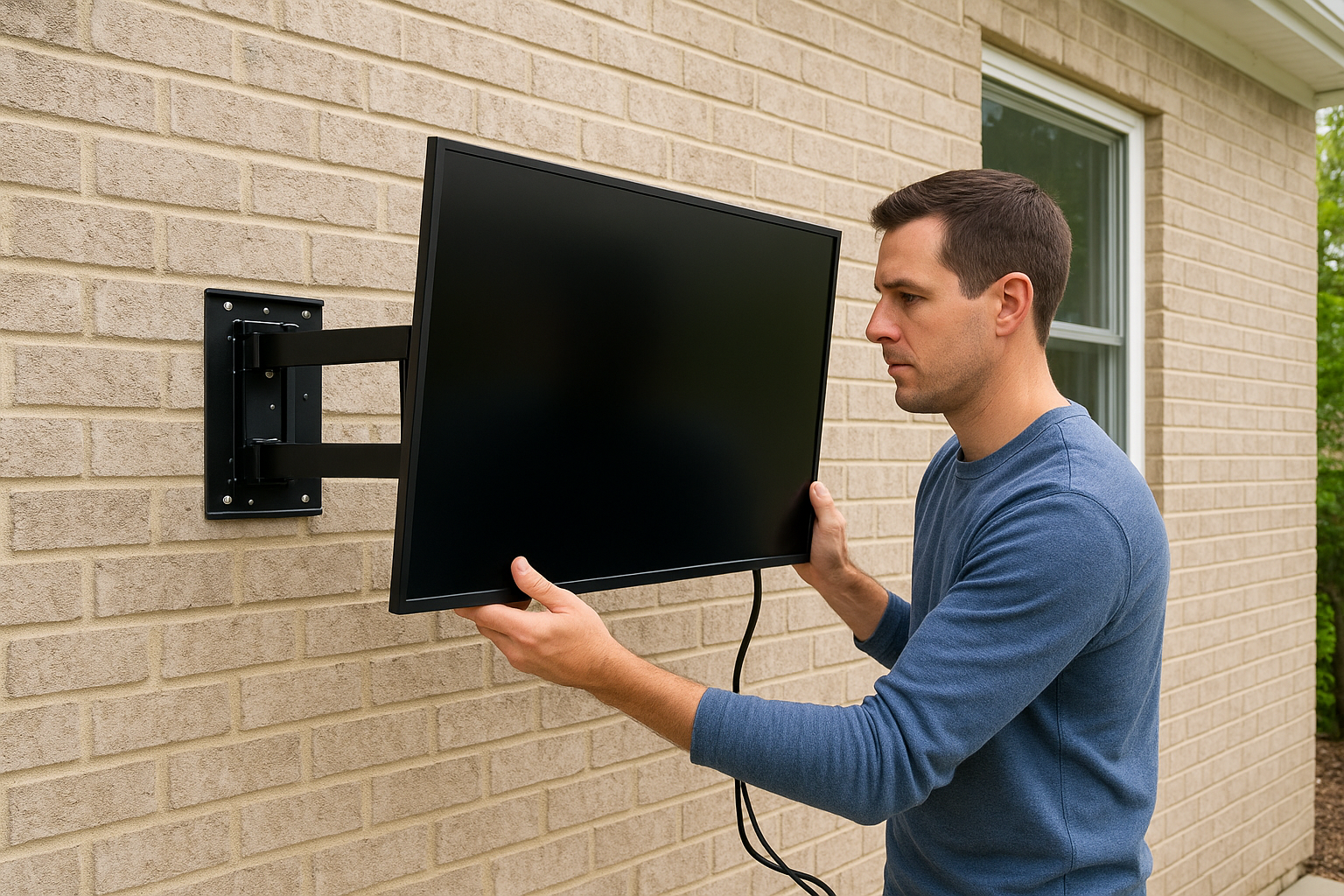
- Mark the stud centers, hold the plate at your chosen height, and check it with the level.
- Drill pilot holes. Use a masonry bit for brick or block.
- Use the specified fasteners, torque and wall-system sealing method for the verified structure. Stop if the structure or instructions cannot be confirmed.
- Bolt the brackets to the VESA holes on the TV.
- Lift the TV onto the plate together and engage the latch.
Every bolt goes into framing or masonry, never into siding alone.
Route, seal, and test the cables
Follow the exact mount, TV and wall-system instructions for attachment, cable entry sealing, drainage and inspection. Wind loading, corrosion, waterproofing details and service access need site-specific review.
Follow the exact mount, TV and wall-system instructions for attachment, cable entry sealing, drainage and inspection. Wind loading, corrosion, waterproofing details and service access need site-specific review.
Outdoor TV installation costs and when to hire a pro
What DIY and professional installs cost
Outdoor TV installation requires a custom estimate for the actual TV, mount, structure, exposure, access, signal/network/audio and cable route. Standard indoor mounting rates are not an outdoor package price. New or changed outdoor power requires evaluation by an appropriately licensed electrical professional and is not included in TV installation. Confirm any support or warranty terms in writing; none is promised by this guide.
Outdoor TV installation requires a custom estimate for the actual TV, mount, structure, exposure, access, signal/network/audio and cable route. Standard indoor mounting rates are not an outdoor package price. New or changed outdoor power requires evaluation by an appropriately licensed electrical professional and is not included in TV installation.
Outdoor TV installation requires a custom estimate for the actual TV, mount, structure, exposure, access, signal/network/audio and cable route. Standard indoor mounting rates are not an outdoor package price. New or changed outdoor power requires evaluation by an appropriately licensed electrical professional and is not included in TV installation. Confirm any support or warranty terms in writing; none is promised by this guide.
Signs you should hire a pro
Some jobs are not worth the risk. Call a professional if any of these apply:
- Your wall is stucco, stone, or block, and you have never drilled it
- The TV is 65 inches or larger, or weighs more than 75 pounds
- You need a new outlet or circuit outside
- The mount height needs more than a stepladder
- You want every cable hidden inside the wall
A missed stud or a cracked anchor point costs far more than the labor you tried to save.
Outdoor TV installation requires a custom estimate for the actual TV, mount, structure, exposure, access, signal/network/audio and cable route. Standard indoor mounting rates are not an outdoor package price. New or changed outdoor power requires evaluation by an appropriately licensed electrical professional and is not included in TV installation. Confirm any support or warranty terms in writing; none is promised by this guide.
Making the call: DIY or professional install
Use a mount explicitly suitable for the TV’s actual weight, VESA pattern, screw requirements, mounting structure and intended movement, following the exact TV and mount instructions. Screen diagonal, a generic weight multiplier or a particular anchor alone does not establish suitability. Outdoor hardware must also suit the exposure, corrosion and wind conditions. Request a site-specific assessment before committing to an installation.
Outdoor TV installation requires a custom estimate for the actual TV, mount, structure, exposure, access, signal/network/audio and cable route. Standard indoor mounting rates are not an outdoor package price. New or changed outdoor power requires evaluation by an appropriately licensed electrical professional and is not included in TV installation.
Use a mount explicitly suitable for the TV’s actual weight, VESA pattern, screw requirements, mounting structure and intended movement, following the exact TV and mount instructions. Screen diagonal, a generic weight multiplier or a particular anchor alone does not establish suitability. Outdoor hardware must also suit the exposure, corrosion and wind conditions. Request a site-specific assessment before committing to an installation.
Plan the installation separately from the equipment
Outdoor suitability depends on the exact model’s shade, partial-sun or full-sun designation, environmental rating, operating and storage temperature limits, installation instructions and actual exposure. An outdoor label is not a universal weatherproof or all-season guarantee. A cover does not make an indoor TV suitable for outdoor use. Confirm current manufacturer warranty terms for the exact model and use. Outdoor TV installation requires a custom estimate for the actual TV, mount, structure, exposure, access, signal/network/audio and cable route. Standard indoor mounting rates are not an outdoor package price. New or changed outdoor power requires evaluation by an appropriately licensed electrical professional and is not included in TV installation.
Outdoor and patio installation assessment · Samsung Frame assessment · TV mounting guides
Specialist installation scope reviewed October 15, 2026.
Need Expert Help?
Ready to implement these solutions in your own home or business?
Our Services
Expert TV Mounting Treasure Valley Homeowners & Businesses Trust

Home theater design and installation planned around your room, viewing goals, and equipment scope.
Serving the Treasure Valley
Local installation in your city